Difference Between Thrustmaster Eswap X2 H E and Echo Show 8 4Th Gen 2025 Explained
Category: Electronics
Introduction
At first glance, comparing the Thrustmaster Eswap X2 H E and the Echo Show 8 (4th Gen, 2025) can feel like comparing apples and sailboats: one is engineered for hands-on control in competitive play, the other is a voice-first smart display built for the connected home. Yet both appear in modern electronics shopping lists for very practical reasons — they solve interaction problems, one through tactile precision and the other through ambient computing. This article breaks down what each product is for, how they are used in real-world scenarios, what buyers usually care about, and how to choose between them depending on lifestyle, needs, and budget.
Overview: What Each Product Is
Thrustmaster Eswap X2 H E — A Competitive, Modular Controller
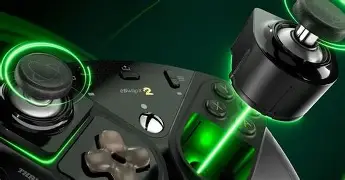
The Thrustmaster Eswap X2 H E is a specialized gaming controller aimed at serious players who value modularity, responsiveness, and customization. It is designed to give users the ability to change thumbsticks, D-pads, and faceplate modules to match play style and game genre. In practice, buyers choose this kind of controller for tournament play, fighting games, first-person shooters, and any situation where precise inputs and repeatable feel matter.
Echo Show 8 (4th Gen, 2025) — A Mid-Size Smart Display for the Home
The Echo Show 8 4th Gen (2025) is Amazon's mid-size smart display positioned between compact bedside assistants and large kitchen or living-room hubs. It combines a touchscreen with voice assistant capabilities, speakers, and a front-facing camera for video calls. Typical use cases include hands-free timers and recipes in the kitchen, video calling with family, controlling smart-home gear, streaming music and video, and displaying contextual information at a glance.
Detailed Product Analysis
Design and Build
The Thrustmaster Eswap X2 H E emphasizes a robust, performance-first build. The chassis, buttons, and modular connectors are engineered to take the wear of repeated competition use. Many modular controllers prioritize mechanical or tactile switches and reinforced housings. The physical layout is optimized for fast access to remappable paddles or extra buttons without awkward hand movement.
The Echo Show 8 prioritizes a compact footprint and a display-forward design. The 8-inch display is balanced with speaker hardware and a camera; the enclosure is intended to blend into a countertop, nightstand, or side table. Physical controls are minimal (volume, action/microphone mute button), because the device is designed to be interacted with primarily through voice and touch.
Core Functionality
Functionally, the Eswap X2 H E is about direct human-to-game input: low-latency signaling, customizable layouts, and modular swaps that adjust mechanical feel and ergonomics. Its value is realized in play sessions where milliseconds or a different stick profile can change outcomes.

The Echo Show 8 acts as an always-available information and control surface: live weather, calendar, routines, smart-home dashboards, streaming content, and video calls. The user experience revolves around passive awareness (displaying information proactively) and active voice interactions (asking questions or commanding smart devices).
Connectivity and Compatibility
Buyers of the Eswap X2 H E typically check compatibility with specific consoles and PC platforms, whether the controller works natively with PlayStation, Xbox, Nintendo Switch, or requires adapters or drivers. Connectivity in this product class can be wired (USB) for the lowest latency, with some models offering wireless options or adapters for consoles and PC. Platform-level support (plug-and-play vs. driver installation) is a common purchase consideration.
Find top-rated Electronics products at great prices.
See Deals →Echo Show 8 connects to home Wi‑Fi and integrates with the Alexa ecosystem. Buyers check whether their existing smart-home devices (lights, locks, cameras, thermostats) are supported, and whether they use an ecosystem where Alexa skills and third-party services work well. Integration with streaming services and video-call platforms is also relevant.
Software, Customization, and Ecosystem
Customization is the selling point of the Eswap X2 H E. Users expect remapping software, on-device profiles, and the ability to save presets for different games. Competitive players often desire macro support, adjustable dead zones, trigger behavior settings, and firmware updates that refine performance over time.
Echo Show 8's "customization" is ecosystem-driven: routines, skills, display layouts, and smart-home scenes. Users can personalize what widgets appear on the screen, set up multi-step automations (for example, "good morning" routine), and choose which services are linked to voice commands. Privacy settings — camera shutter, microphone mute, and activity history — are part of the software conversation buyers evaluate.
Real-World Use Cases
- Competitive gamer: Uses the Eswap X2 H E to swap in a shorter travel stick for FPS sessions, remap paddles for easier weapon switching, and rely on wired mode for consistent latency during tournament matches.
- Livestreamer or content creator: Sets controller profiles for different games, uses macros for repetitive in-game actions, and pairs the controller with a capture setup on PC.
- Family kitchen hub: Echo Show 8 displays step-by-step recipes, sets timers via voice, streams instructional videos, and provides overview notifications (e.g., package deliveries, calendar alerts).
- Remote worker or parent: Uses the Echo Show 8 for quick video calls, checks a shared calendar, and controls smart lights or locks without leaving the desk.
Pros & Cons
Thrustmaster Eswap X2 H E
- Pros:
- High degree of physical customization for different play styles
- Designed for low-latency, responsive input suited to competitive gaming
- Durable components and a performance-oriented build
- On-device profile options reduce dependence on software during events
- Cons:
- Higher price than basic controllers due to modular hardware
- Learning curve for configuring profiles and hardware swaps
- Less useful for non-gaming daily tasks — single-purpose device
Echo Show 8 (4th Gen, 2025)
- Pros:
- Convenient hands-free voice control with a readable screen
- Versatile: music, video, video calls, smart-home dashboard
- Compact size fits many spaces without dominating a room
- Software-driven improvements and third‑party skill integration
- Cons:
- Dependent on a cloud ecosystem for key features and updates
- Privacy concerns for some users (camera and always-listening microphones)
- Limited local file playback and less granular control compared to dedicated AV hardware
Side-by-Side Comparison
| Category | Thrustmaster Eswap X2 H E | Echo Show 8 (4th Gen, 2025) |
|---|---|---|
| Primary Purpose | Competitive gaming controller; physical input device | Voice-first smart display and home assistant |
| Ideal User | Serious gamers, tournament players, customization enthusiasts | Families, cooks, remote workers, smart-home users |
| Interaction | Physical buttons, sticks, remappable controls | Touchscreen, voice (Alexa), limited physical buttons |
| Connectivity | Typically wired USB (low latency); some adapters/wireless options possible | Wi‑Fi, Bluetooth for peripherals and media; cloud services |
| Display | None | 8-inch touchscreen for content & visual feedback |
| Audio | Dependent on host device (console/PC audio) | Built-in stereo speakers for music, calls, and media |
| Camera | None | Front-facing camera for video calls and home monitoring features |
| Customization | Physical module swaps, remapping, profiles | Routines, skills, display widgets, voice shortcuts |
| Portability | Portable within gaming setups; requires host device | Stationary (requires power outlet and Wi‑Fi) |
| Battery | Usually none (wired); wireless versions may include battery | Plug-in only |
| Price & Value | Premium for modular and competitive features | Mid-range; value depends on how much the user leverages the ecosystem |
Buying Guide: How to Choose
Choosing between these devices depends less on feature parity and more on what problem the buyer needs solved. The questions below help clarify which product makes sense.
1. What is the primary intended use?
If the priority is improving in-game performance, reducing input lag, or tailoring controls to different game genres, a modular competitive controller is the clear choice. If the goal is hands-free information, smart-home control, or a shared display for recipes and calls, a smart display like the Echo Show 8 is the right category.
2. Which ecosystems are already in use?
Buyers should think about platform compatibility. Gamers with a specific console will want to confirm controller compatibility or available adapters. Home users should check whether smart devices and streaming services they already use play well with Alexa and the Echo Show ecosystem.
3. How important is customization versus convenience?
A controller shines when a buyer wants granular physical customization and the ability to tweak mechanical feel. The Echo Show 8 prioritizes convenience — voice control, routines, and a visual dashboard — more than deep hardware customization.
4. Is mobility needed?
Controllers travel easily between setups and events; smart displays are designed to remain plugged in and stationary. If mobility matters — for LAN events or couch-to-desk switching — a controller is more flexible.
Shop the latest Electronics picks on Amazon.
View Offers →5. How much does privacy factor into the decision?
Smart displays include microphones and cameras that some buyers find intrusive, even when the device offers physical mute or shutter options. The controller presents no such privacy trade-offs, making it a safer choice for privacy-focused buyers.
6. Budget and long-term value
Compare initial price against long-term use: a premium controller may be expensive up front but becomes indispensable to a dedicated player. The Echo Show 8 may represent better value for households that will use voice, video, and smart-home control daily.
Practical Buying Tips
- Read compatibility notes carefully: check console/PC support for controllers and Alexa skill availability for smart-home devices.
- Test ergonomics where possible: controllers feel very different in hand; ergonomic comfort matters over long sessions.
- Consider warranty and replaceable parts: modular controllers can be repaired or upgraded; check manufacturer support.
- Evaluate network and privacy settings: for smart displays, review camera/microphone controls and network security practices.
- Think about accessories: controller carrying cases, thumbstick variants, and charging solutions; smart display stands or mounts and echo-compatible smart home hubs.
Who Should Buy Which?
Personas help simplify the decision:
- Competitive Gamer / Esports Enthusiast: Likely to favor the Thrustmaster Eswap X2 H E for its modularity and performance orientation.
- Family Cook / Smart-Home User: Likely to favor the Echo Show 8 for voice-first convenience, recipe display, and home control.
- Content Creator with Live Gameplay: Might keep both: a high-quality controller for gameplay and an Echo Show as a secondary display for chat moderation, timers, or quick calls.
- Privacy-Conscious or Minimalist: May prefer the controller (or neither) if they avoid cloud-connected always-on devices.
Maintenance and Longevity Considerations
For the controller, buyers should plan for eventual wear on moving parts like thumbsticks and switches; choosing a product with replaceable modules extends usable life. Firmware updates from the manufacturer can improve performance and compatibility, so confirm update mechanisms.
For the smart display, longevity depends on ongoing cloud service support and platform updates. The usefulness of the Echo Show 8 increases with new Alexa features and improved integrations, but it can also lose functionality if services are deprecated. A strong Wi‑Fi setup and periodic software updates are essential for a smooth experience.
Conclusion
The Thrustmaster Eswap X2 H E and the Echo Show 8 (4th Gen, 2025) serve distinct roles in modern electronics: one is an instrument for precise human input in gaming, the other is a hub for ambient computing and smart-home convenience. Buyers should anchor the decision to the central problem they want solved. For improved in-game control, customization, and low-latency performance, a high-end modular controller is the right investment. For shared household convenience, voice control, and a visual surface for media and calls, a mid-size smart display like the Echo Show 8 is the more appropriate choice.
For some households, the products are complementary rather than competitive: a dedicated gamer can benefit from the Eswap X2 H E, while the rest of the family uses the Echo Show 8 for everyday tasks. The key is to match device strengths to real-world needs — precision and control for gaming; visibility, voice, and connections for the smart home.