A Professional's Take on the New Tcl Qm8K
Introduction
The Tcl Qm8K arrives in a crowded premium TV space with high expectations. For buyers who care about picture fidelity, gaming responsiveness, and a modern smart-TV experience, understanding how a new model stacks up in real-world conditions matters more than glossy marketing copy. This article offers a professional, measured take on the Qm8K — examining design and build, picture performance, motion handling, audio, smart features, connectivity, and real-world use cases. The goal is to give prospective buyers the context they need to decide whether the Qm8K fits their priorities and environments.
Overview and Positioning
The Qm8K is positioned as a premium offering within Tcl’s lineup, aimed at customers who want a step up from midrange sets without necessarily moving into ultra-high-end price territory. It targets living rooms and media rooms where high dynamic range (HDR), wide color volume, and gaming features are important. In practice, the Qm8K attempts to balance three core needs: cinematic picture quality for streaming and movies, low-latency performance for modern consoles, and a smart platform that remains responsive and easy to use over time.
Design and Build
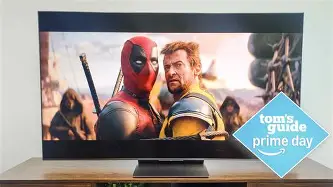
From a design perspective, the Qm8K follows contemporary trends: a thin bezel, understated stand options, and a back panel that keeps ports accessible. The build quality feels solid for the class, with attention to cable management and a low-profile stand that suits media consoles. Those planning wall-mount installations will appreciate the standard VESA compatibility and an unobtrusive rear layout that doesn't add excessive depth. Overall, the Qm8K presents well in a living-room setup and blends into modern interior styles without drawing attention away from the picture.
Picture Quality and Panel Technology
Picture performance is where buyers make or break a decision. The Qm8K emphasizes high contrast and color accuracy; in typical viewing conditions it delivers rich blacks and saturated colors that enhance HDR content from streaming services and Ultra HD Blu‑ray. The TV aims to reproduce a wide color gamut and strong HDR highlights, which benefits content mastered for peak brightness and color, such as nature documentaries and high-budget streaming dramas.
Local dimming and backlight control play a significant role in perceived contrast. In mixed scenes, local dimming helps preserve black levels while allowing highlights to stand out. However, like most TVs with aggressive local dimming zones, some blooming or haloing around very bright objects on dark backgrounds can occur in extreme test patterns. In regular movie and TV viewing the effect is far less noticeable and often not distracting.
Color accuracy out of the box is typically close to what many buyers expect from a premium model, but enthusiasts who demand studio-grade fidelity will still want to run a calibration. TCL’s picture presets provide useful starting points: a “Movie” or “Filmmaker” mode generally reduces oversharpening and aggressive processing, whereas brighter “Vivid” modes exaggerate color and contrast for showroom appeal.
Motion Handling and Upscaling
For live sports, fast-paced TV shows, and gaming, motion handling matters. The Qm8K employs frame interpolation and motion processing to keep fast action smooth, and it allows users to tune these settings to personal preference. While professional viewers often prefer to disable excessive smoothing for cinematic content, the option to interpolate frames benefits sports and some broadcast material.
Upscaling is another area where modern sets spend a lot of engineering effort. The Qm8K’s internal upscaler does a competent job converting HD and 1080p content to a 4K panel, preserving edge detail and minimizing artifacts in most consumer viewing situations. For low-bitrate streaming sources, aggressive processing can sometimes introduce ringing or sharpening artifacts; users should be prepared to tweak processing settings depending on content source.
Audio Performance
Internal speakers on flat-panel TVs are always a compromise. The Qm8K’s built-in sound system performs respectably for everyday TV viewing — dialogue is clear and midrange reproduction is natural. However, for immersive movie sound or to get the most from object-based audio formats, an external soundbar or AV receiver delivers a meaningful upgrade. Buyers focused on home theater should budget for a modest sound system if they want a full, room-filling experience.
Find top-rated TVs & Home Theater products at great prices.
Browse Now →Smart Platform and Usability
Smart TV functionality is critical because it determines day‑to‑day convenience. The Qm8K ships with a modern smart platform that provides access to major streaming services, voice assistant integration, and a simple app layout. Responsiveness is generally solid, with quick app launches and an intuitive settings menu. Over-the-air software updates and a clear roadmap for feature improvements are practical considerations — TCL has been responsive historically, and prospective buyers should check specifics for the Qm8K at point of purchase.
Gaming Features
Console gamers are likely to be interested in low input lag, variable refresh-rate support, and HDMI features that enable the latest consoles to perform at their best. The Qm8K gives attention to these areas with a low-latency game mode and support for higher refresh rates, which helps competitive and action-oriented games feel more immediate. Adaptive sync features and automatic low-latency switching (ALLM) further streamline the console experience. For serious competitive players, pairing the Qm8K with a console that supports 120Hz output will be valuable; casual gamers will also notice smoother play and more responsive controls.
Connectivity and Ports
Practical connectivity matters: the Qm8K offers multiple HDMI inputs, at least one with enhanced bandwidth for next-generation consoles, an eARC-capable HDMI for sound systems, USB ports for local media, and standard wired and wireless networking. Port placement is sensible, and the inclusion of HDMI-eARC simplifies audio routing to soundbars. For households that rely on wireless streaming, the TV supports stable wireless connections and handles 4K streaming reliably in typical home networks.
Real-World Use Cases
Different buyers will value different strengths of the Qm8K:
- Streaming-focused households: The Qm8K is well-suited for families or individuals who watch a lot of HDR-enabled streaming content. Its color and contrast rendering make films and series look punchy and engaging in living-room ambient lighting.
- Casual and console gamers: With low input lag and higher refresh-rate support, the Qm8K meets the needs of gamers who play fast-paced titles on modern consoles. Multiplayer gamers who prioritize response time will appreciate the game mode optimizations.
- Mixed-use living rooms: For households that want a single TV to do everything — live sports on weekends, movies on weeknights, and gaming — the Qm8K is a balanced choice, handling a variety of content types well.
- Home theater setups: Owners seeking a dedicated dark-room home theater should consider pairing the Qm8K with an external sound system and possibly professional calibration to extract the maximum cinematic performance.
Pros & Cons
- Pros
- Strong overall picture quality with deep contrast and vibrant color rendition in everyday viewing.
- Smart platform that is responsive and provides wide streaming app support.
- Good gaming features, including low input lag and higher refresh-rate support.
- Solid build quality and practical port layout for typical living-room setups.
- Local dimming implementation improves HDR punch in many viewing scenarios.
- Cons
- Some blooming/haloing can appear around bright objects in very high-contrast test patterns.
- Internal speakers are serviceable but not a replacement for a dedicated soundbar or AV system.
- Advanced users may want finer calibration options or deeper post-processing controls.
- Price positioning may put it close to competitor models with different strengths — buyers should compare based on personal priorities.
How the Qm8K Compares
A short, practical comparison helps place the Qm8K next to familiar alternatives. The table below highlights broad differences a buyer will care about; it is intended as a directional guide rather than a substitute for hands-on testing.
| Feature | Tcl Qm8K | Tcl 6-Series (typical) | Samsung QN Series (typical) | Sony X-Series (typical) |
|---|---|---|---|---|
| Panel & Backlight | Premium panel with local dimming aimed at deep blacks and HDR punch | High-value Mini‑LED / QLED blend focused on contrast | High-brightness QLED with strong anti-reflective coatings | Precision processing with excellent color and motion handling |
| Picture Tuning | Balanced presets for movies and gaming; room for calibration | Often very consumer-friendly out-of-box | Vibrant factory tuning, sometimes oversaturated | Accurate cine modes aimed at purists |
| Gaming | Low input lag and higher refresh-rate support | Competitive gaming features in many models | Strong gaming feature set in higher tiers | Excellent motion and upscaling; competitive latency |
| Smart Platform | Modern app ecosystem and voice assistants | Varies (Roku/Google/TCL OS options) | Robust Smart Hub and gaming integrations | Android-based platform with strong app support |
| Value | Premium features for a competitive price point | Strong price-to-performance ratio | Premium pricing at top tiers | Premium pricing; focus on processing and color accuracy |
Buying Guide: How to Decide If the Qm8K Is Right for You
Choosing the right TV depends on personal priorities, room conditions, and budget. The following checklist helps buyers weigh whether the Qm8K is a strong fit.
1. Assess viewing environment
Room brightness and ambient light shape how a TV should perform. The Qm8K performs well in typical living rooms and can handle moderately bright spaces, but for very bright rooms buyers should look for models with extreme peak brightness and strong anti-reflection layers. Conversely, in a dedicated dark-room cinema, consider professional calibration to maximize contrast and shadow detail.
2. Prioritize content type
If most viewing is streaming movies and premium TV shows, color accuracy and HDR highlight handling are core. If live sports or network TV are primary, motion handling and a bright picture should rank higher. For gaming, prioritize input lag, refresh rate, and HDMI features. The Qm8K is a balanced choice across these use cases, but users should emphasize the single most important use case when comparing models.
Looking for the best TVs & Home Theater deals on Amazon?
Browse Now →3. Consider sound separately
Onboard speakers can handle dialogue and casual viewing, but they rarely match a dedicated soundbar for immersive action scenes or music. Allocate part of the audio budget to a soundbar or simple surround setup if cinematic audio matters.
4. Check connectivity and future-proofing
Confirm the presence of an HDMI eARC port if integrating with a sound system, multiple HDMI inputs for consoles and streaming devices, and a fast, stable Wi‑Fi connection. These practical details determine how well the TV integrates into an existing home theater or gaming setup.
5. Software and longevity
Smart platform responsiveness and firmware update policy matter. A TV that receives regular updates and maintains app compatibility delivers more long-term value. Ask retailers or TCL support about the software update policy and expected longevity for the Qm8K model.
6. Calibration and professional setup
Enthusiasts should factor in the option of professional calibration or at least spend time using the “Movie/Filmmaker” presets combined with minor adjustments to brightness, contrast, and color temperature. Many buyers are satisfied with out-of-the-box results, but calibration optimizes the set for either a living-room or dedicated-home-theater environment.
Price and Value Considerations
Price positioning influences whether the Qm8K represents a compelling buy. In its target bracket, the TV is designed to deliver features and picture quality that compete with other premium-but-not-flagship sets. Buyers should compare price against feature parity (local dimming implementation, HDR format support, refresh rate, and smart platform responsiveness) and look for sales or bundles that include soundbars or extended warranties when value is a key consideration.
Final Thoughts and Conclusion
The Tcl Qm8K is a thoughtfully engineered television that aims to balance the competing demands of picture quality, gaming performance, and everyday usability. In real-world use it delivers strong contrast, pleasing color, and modern smart features that will satisfy a broad range of buyers. Its strengths lie in delivering cinematic visuals for streaming and responsive gaming performance for current consoles, all within a design that integrates neatly into modern living spaces.
No TV is perfect for every buyer: the Qm8K shows modest trade-offs in extremely high-contrast test scenarios and reproduces audio at a level where a soundbar remains a recommended upgrade for cinephiles. For most purchasers — families, mixed-use households, and gamers who want a single TV to do it all — the Qm8K provides a compelling mix of performance and features. Prospective buyers should match their environment and primary use case to the Qm8K’s strengths, review competitive models in person where possible, and consider calibration and a modest sound upgrade to get the most from the set.